
See also
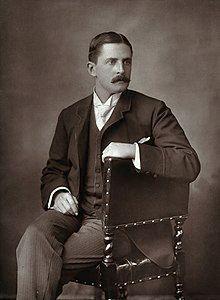
Thomas Heazle PARKE
Name:
Thomas Heazle PARKE
Sex:
Male
Record Id:
1046
Father:
Mother:
Birth:
27 Nov 1857
Clogher House, Kilmore, Drumsna, Co. Roscommon
Christening:
Dec 1857 (age 0)
Kilmore, Drumsna, Co. Roscommon
Death:
10 Sep 1893 (age 35)
on board yacht off Ardrishaig, Scotland
Burial:
16 Sep 1893
Kilmessan Cemetery, Drumsna, Co. Leitrim
Second son, one of 10 children.
Reared in Carrick-on-Shannon, Co. Roscommon
Studied medicine at Royal Academy of Surgeons {During his "licentiate in midwifery" in 1879 in the City of Dublin Hospital the Matron was Caroline Heazle (wife of Isaac Stamers Heazle, barrister). Isaac Stamers was a nephew of William Keazle who was the husband of Amelia Holmes (the aunt of his mother Henrietta)} and sought service in the English Army..
Commissioned Surgeon Major in A.M.D. (Army Medical Detachment). In
1887, joined the expedition Henry Stanley mounted to relieve Gordon's ally,
the German-born Emin Pasha, Governor of Equitoria in Africa. The expedition
suffered a three-year nightmare. They had to transport an army of men (and
some women) by boat along the Congo and through almost impenetrable jungle.
They faced wild animals, attacks from Africans armed with poisonous arrows and
spears, and endless sickness. Discipline was enforced by flogging and even
hanging. The party participated in a ghastly cannibal feast, the girl used for
the meal sold for four handkerchiefs by her own mother. During the expedition Parke bought a pygmy girl. For more than a year they travelled together and she nursed him through malaria. He was forced to leave her behind eventually because her eyes could not adapt to sunlight after the darkness of the forest. Over 200 African members of the expedition died. The brutal and expensive enterprise proved
futile when it was discovered Emin Pasha was happy as Governor, not wanting to
be relieved at all.
Surgeon Major Parke was, of course, the expedition doctor who treated Henry
Stanley and the others. He picked up some tropical disease and died at age 35
of "parasitic worms." Before his death, however, he wrote several valuable
books on tropical diseases and an account of his adventures titled "My Personal
Experiences in Equatorial Africa." The latter book became a Victorian best-
seller.
A statue to Parke stands outside Dublin's Natural History Museum. Inside
the Museum, displayed in a small glass cage surrounded by stuffed animals,
is Parke's stained and bleached tropical uniform and the patent leather
leather boots he wore crossing Africa from Banana Point on the west coast at
the mouth of the Congo to Zanzibar on the east.
SOURCES: Dictionary of National Biography, Vol XV, National Library, Dublin
"Surgeon Major Parke's African Journey -- 1887-89" by J.B. Lyons,
Lilliput Publishing, Dublin and London
Historical Society on the wall of the town hall and plans are underway to convert the old church of Ireland church in Kilmore, Co. Roscommon into a Heritage Centre which will be dedicated to this Irish hero and will hold another memorial plaque commissioned by Henry Morton Stanley, Commander of the African expedition and his aide, A.J. Mounteney Jephson, Lieutenant.
Source: Booklet titled "Surgeon Major T.H. Parke: A Short History of his Life" published by Carrick-on-Shannon & District Historical Society to commemorate the unveiling on June 1, 1994 of a plaque to his mmory in the Town Hall, Carrick-on-Shannon.
Letter From National Museum of Ireland
From The Director's Office,
National Museum of Ireland,
Kildare Street,
Dublin 2
21/2/1964
Notes From The Directors Office
Thomas Heazle Parke was born in Clougher House, Drumsna, Co. Leitrim, his family's place, on 27th November 1857. He was educated at the Rev. Edward Power's private school, No. 3 Harrington St., Dublin, later at the school of the Royal College of Surgeons; the City of Dublin Hospital (Baggot St.), the Richmond, Whitworth and Hardwicke Hospitals. He took his licentiate in midwifery in 1879. He took his licentiate lf
the Royal College of Surgeons of Ireland in 1878 and of the King and Queen's College of Physicians of Ireland and his licentiatein midwifery in 1879. He practised for a while in Ballybay, Co. Monaghan, then in Bath. He joined the Army Medical Corps in 1881. He served the Tel0el-Kebir campaign in 1882. Did tremendous work during the severe outbreak of cholera in Egypt in 1883. Went on the Nile expedition 1884-85 for the relief of Gordon, during which he crossed the Bayuda Desert; fought at Gubat and Metammet, from whence he returned to Alexandria. He stresses in some of his writings how easily Gordon might have been saved if only even one boat had been sent at once from Metammet to Khartoum.
In 1887 he volunteered to accompany Henry Morton Stanley (later Sir Henry Stanley) on an expedition for the relief of Emin Pasha. His devotion to the care of the sick and wounded, and his courage in all the trials and hardships earned the statement of Stanley that "without Parke the expedition would have been a failure".
The hardships and privations of this campaign undermined his health seriously and no doubt shortened his life. On his return from it he was honoured by many learned societies and decorated for his valour. Parke's general health was good, but he had developed a liability to convulsive attacks, possibly an indication of cerebral cysticercosis. In August 1893 he visited his friends the duke and duchess of St Albans, whose yacht lay off Ardrishaig, Scotland, and on the morning of 11 August 1893 was found dead in his bedroom, still fully dressed \endash presumably he died in the course of a seizure. His remains were taken to Ireland for burial at Drumsna, Co. Roscommon, near Clogher House. His funeral was accorded military honours as it passed through Dublin. His statue (1896) by Percy Wood stands outside the Natural History Museum, Merrion St., Dublin.A Memorial Hall, named the Parke Hall in his honour.
More About SURG. MAJ. THOMAS HEAZLE PARKE:
Burial: 16 Sep 1893, Kilmessan Burial Ground, Drumsna
Assembling ancestral lines...